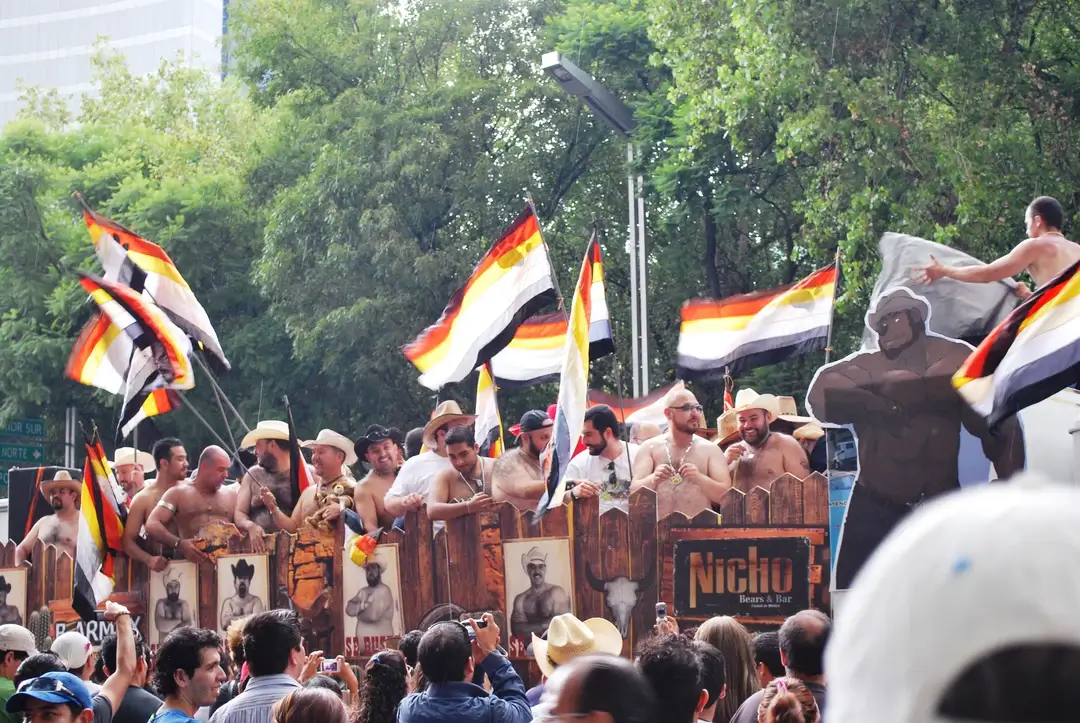

The bear community is a long-standing subculture within the LGBTQ+ world. It’s built around body positivity, authenticity, camaraderie, and belonging — not a single look or image. If you’ve ever asked what is a bear community, you’re in the right place. This guide covers how the community started in 1970s San Francisco, what it stands for, its subgroups, its global events, and why it’s still going strong today.
What Is the Bear Community?
The bear community is a subculture within LGBTQ+ spaces — primarily made up of gay and bisexual men who are typically larger in build and/or hairy — united by shared values of body positivity, authenticity, camaraderie, and inclusive belonging.
What is a bear community? Simply put, it’s a space where people belong — no matter what they look like. The community grew in the late 1980s as a direct response to exclusion. Gay men who didn’t fit the slim, smooth, youthful image of mainstream gay culture found each other. They named what they had in common, and they built something that has lasted ever since.
Today, the bear community is global. It has its own flag, its own events, and its own vocabulary of identities. For decades it has pushed back against narrow ideas of beauty — both in mainstream society and within LGBTQ+ spaces. Wikipedia’s overview of bear culture offers a useful primer on how the community is documented and understood outside the community itself.
What Does Bear Mean in LGBTQ?
In LGBTQ+ culture, bear refers to a self-identified gay or bisexual man — typically larger in build and/or hairy — who connects with bear culture and its values. The key word is self-identified. Bear isn’t a label anyone puts on you from outside. There’s no size test or body-hair checklist. If you feel at home in the community and share its values, you belong.
The word entered LGBTQ+ culture in 1979. That year, journalist George Mazzei used animal types to describe different kinds of gay men in an article for The Advocate. “Bear” was one of those types — and it stuck. Over time it grew into a full community identity with its own culture, events, and pride symbol.
Bear identity sits within the LGBTQ+ spectrum but has its own personality. It overlaps with broader gay culture, but it’s always had a different point of view — standing up for what mainstream gay spaces have historically ignored or left out.
A Brief History of Bear Culture

The bear community has a clear, documented origin story. Knowing it helps explain why the community’s values are what they are.
1979: “Bear” Enters the Language
The earliest public use of “bear” as a gay male identity appeared in 1979 in The Advocate, a well-known LGBTQ+ magazine. Journalist George Mazzei published an article called “Who’s Who in the Zoo?” It used animal types to describe different kinds of gay men. The bear type was defined by build, body hair, and a grounded quality — a contrast to the polished image that dominated mainstream gay culture at the time.
1987: Bear Magazine and a Cultural Anchor
Eight years later, Bear Magazine launched and gave the growing community something to rally around. The magazine put larger male bodies, body hair, and down-to-earth masculinity front and centre. For many men across the US and beyond, seeing their own image celebrated for the first time was a big deal. Bear Magazine wasn’t just a publication — it was proof the community existed.
Late 1980s, San Francisco: A Community Takes Shape
The bear community came together in San Francisco in the late 1980s. Gay biker clubs in the city influenced its culture of brotherhood and solidarity. A key early gathering spot was the Lone Star Saloon, which opened in 1989 and became a home base for men building what we now know as bear culture.
What happened in San Francisco wasn’t just socialising — it was identity building. Gay men who had felt shut out of mainstream gay spaces were creating something of their own. A place where their bodies, their style, and their values weren’t just accepted — they were celebrated.
Core Values of Bear Identity

The bear community is defined as much by what it stands for as by who’s in it. Four values show up consistently across bear culture worldwide:
Body Positivity
The bear community has celebrated larger, hairy, and “non-standard” male bodies since before “body positivity” was a mainstream phrase. Bears embrace the full range of male physicality — not just the narrow slice that mainstream media has always held up as the ideal.
Authenticity
Bear culture values being real over being polished. The tone is warm and direct — not image-managed or performative. The strong ethos is simple: show up as you are.
Camaraderie
Community over competition. People who spend time in bear spaces consistently describe them as warm, welcoming, and built on solidarity. This isn’t a community built around status or who gets in.
Inclusivity
Even though the community started around a specific body type and context, it’s always had an open founding spirit — welcoming men across ethnicities, ages, sizes, and backgrounds. Inclusion is built in, not added on as an afterthought. The Gay & Lesbian Review’s deep-dive into bear culture captures this founding ethos well.
Bear Subgroups Explained
The bear community isn’t one single group. Over the decades, a rich vocabulary has developed to describe different looks, builds, and identities within the wider bear umbrella. These labels are descriptive, not rules — many people use more than one, or shift between them over time.
| Subgroup | Description |
|---|---|
| Bear | The core identity — typically larger-built, hairy, gay or bisexual |
| Cub | Younger or smaller bear; often newer to the community |
| Chub | Bear with a chubbier build; sometimes used as a distinct identity |
| Muscle Bear | Large and muscular — the bear build with significant gym presence |
| Daddy Bear | Older bear; associated with mentorship or authority dynamics |
| Polar Bear | Older bear with gray or white hair |
| Leather Bear | Intersects the bear and leather/kink communities |
| Otter | Lean and hairy — on the slimmer, smaller end of the bear spectrum |
| Wolf | Lean, hairy, rugged presentation — similar to otter, with a more assertive edge |
These labels help people find their people — they’re not meant to draw hard lines. Someone might call themselves a cub in their twenties and a bear or daddy bear twenty years later. The labels travel with you.
The Bear Pride Flag
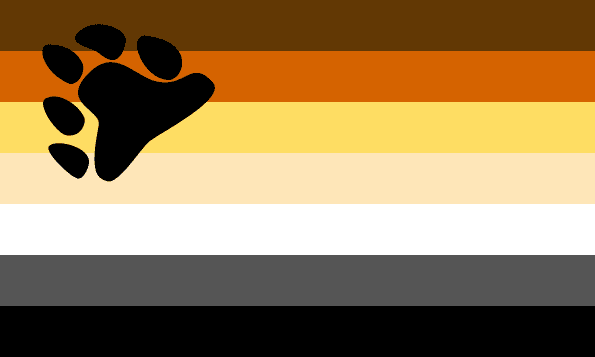
The Bear Pride Flag is one of the most recognisable symbols in LGBTQ+ culture. It has a specific, well-documented origin story.
Origins
Craig Byrnes designed the flag in Washington, D.C. in 1995. Paul Witzkoske carried out the winning design. The flag was first shown publicly at the Chesapeake Bay “Bears of Summer” event in July 1995 — making it one of the few LGBTQ+ pride symbols with a confirmed first showing.
Design
The Bear Pride Flag has seven horizontal stripes, running from top to bottom in these colors:
- Dark brown
- Orange/rust
- Golden yellow
- Tan
- White
- Gray
- Black
In the upper left corner sits a bear paw print — the community’s most recognisable icon.
What the Colors Represent
The seven colors represent the fur colors of bear species from around the world — from grizzlies and polar bears to black bears and sun bears. The meaning is global inclusivity: bears live on every inhabited continent, and so does the bear community. The paw print stands for community identity itself.
The flag flies at Pride parades, bear events, and LGBTQ+ gatherings around the world. It remains the main visual symbol of bear identity globally. The full documented history of the flag’s design and adoption is covered in the Bear flag (gay culture) article on Wikipedia.
Bear Events Around the World
The bear community LGBTQ network is truly global. The International Bear Brotherhood (IBB) connects bears worldwide through shared events, pride gatherings, and online community spaces.
Major bear events include:
- International Bear Rendezvous — San Francisco, one of the oldest and largest dedicated bear gatherings in the world
- Belgium Bear Pride — a major European bear event drawing attendees from across the continent
- Luxembourg Bear Pride — another big European gathering with a strong international crowd
- Bear runs and tracks at major Pride parades globally — from EuroPride to Sydney Mardi Gras, most large Pride events now include bear-specific programming
Bear events aren’t just parties. They’re community infrastructure. Friendships form across long distances. Cubs find mentors. A scattered global community becomes real and tangible. For many bears who don’t have a local bear scene, these events are the main way they experience community in person. Bear events often intersect with wider LGBTQ+ social culture — if you’re curious how that extends into other spaces, our complete guide to gay cruising covers the social and cultural side of LGBTQ+ nightlife and community spaces.
The Bear Community Today
The bear community has kept evolving through the 2020s. Since the late 2000s, trans men and male-presenting non-binary people have been increasingly recognised and welcomed as bears — a natural extension of the community’s founding open spirit.
A landmark moment came in 2025, when the Mr. Australasia Bear competition in Melbourne crowned its first transgender titleholder, Jeb Maihi Brown. It was a clear, visible marker of how bear culture keeps growing — not by leaving its roots behind, but by living out its own values more fully.
The same spirit that said “there is room for you here” in 1989 San Francisco still drives the community today. The community has grown in size, geography, and scope — but its character has stayed recognisable.
Why the Bear Community Matters
The bear community is one of the earliest and longest-running movements for body acceptance within the LGBTQ+ world. It pushed back against narrow ideas of beauty — not just in mainstream society, but within gay culture itself. That double challenge is what makes it significant beyond its own membership.
When you ask what is a bear community, the full answer goes well beyond a body type. It’s a community that said, decades before the language became common: you belong here, as you are. It built spaces, events, flags, magazines, and lasting friendships around that idea — and it’s been building them for more than four decades.
The bear community’s history offers something quietly powerful to anyone who’s felt like an outsider: proof that outsiders can build the best, most durable communities of all.
Husky Bear Poppers is a European poppers store rooted in bear community culture. If you found this guide useful, explore more on our community blog — we cover community history, events, and the culture that connects bears across Europe and beyond.
Frequently Asked Questions
What is a bear community?
The bear community is a subculture within LGBTQ+ spaces — primarily composed of gay and bisexual men who are typically larger-built and/or hairy — united by values of body positivity, authenticity, camaraderie, and inclusive belonging. It originated in San Francisco in the late 1980s and has grown into a global community with its own events, symbols, and subgroups.
What does bear mean in LGBTQ?
In LGBTQ+ culture, “bear” refers to a self-identified gay or bisexual man — typically larger in build and/or hairy — who connects with the values and culture of the bear community. Bear identity is self-determined: it is built on shared values, not strict physical criteria.
What are the different bear subgroups?
The main bear subgroups include: Bear (core identity), Cub (younger or smaller), Chub (chubbier build), Muscle Bear (large and muscular), Daddy Bear (older, mentorship associations), Polar Bear (older with gray or white hair), Leather Bear (intersecting bear and leather communities), Otter (lean and hairy), and Wolf (lean, hairy, rugged). These labels are descriptive, not prescriptive.
What is the Bear Pride Flag?
The Bear Pride Flag was designed by Craig Byrnes and first displayed in July 1995 at the Chesapeake Bay “Bears of Summer” event. It features seven horizontal stripes — dark brown, orange/rust, golden yellow, tan, white, gray, and black, representing bear fur colors worldwide — with a bear paw print in the upper left corner.
When did the bear community start?
The bear community formally took shape in San Francisco in the late 1980s. The term “bear” first appeared in print in 1979 in The Advocate, Bear Magazine launched in 1987, and the Lone Star Saloon (opened 1989) became an early community gathering hub in San Francisco.
Are trans men welcome in the bear community?
Yes. Since the late 2000s, trans men and male-presenting non-binary people have been increasingly welcomed and recognised within the bear community. In 2025, the Mr. Australasia Bear competition crowned its first transgender titleholder — a significant milestone in the community’s ongoing evolution toward full inclusivity.