
The short answer: Poppers in the gay community are small bottles of alkyl nitrite that people know by name, joke about, and argue over online — but that far fewer people actually use than you’d think. They started life as a Victorian heart medicine, drifted into gay nightlife by the 1970s, and have hung around ever since as a bit of shared cultural furniture. The short version – poppers in the gay community aren’t “the gay drug,” they’re not a rite of passage, and they’re not magic or evil. They’re a product some men like, some men can take or leave, and plenty of men have never touched. If you’ve seen the word on a dating app and wondered what everyone’s on about, this post clears it up without hype and without a lecture.
I’m The Bear, and I’ve been selling poppers since 2016. I’ve had this exact conversation more times than I can count — with mates, with first-timers, with blokes who came back a fortnight later to tell me it wasn’t what the internet promised. So let’s talk about it properly.
Table of Contents
What are Poppers?
Let’s start with the bottle, because that’s the part nobody explains clearly.
Poppers are a small bottle of liquid from a family of chemicals called alkyl nitrites — most commonly amyl nitrite, but also propyl, pentyl and hexyl, plus a few blends. That’s it. That’s the product. Everything else you’ve heard is culture stacked on top of a fairly ordinary bit of chemistry.
The name is the fun part. Back in the 1800s, amyl nitrite was a genuine medicine, used to treat angina — the chest pain you get when blood vessels around the heart tighten up. It came in little glass capsules wrapped in mesh, and you’d crack one open when you needed it. That crack made a “pop” sound. That’s where the name comes from. So the next time someone insists poppers are some seedy modern invention, you can tell them they’re actually named after a Victorian pharmacy sound effect.
Over the decades, medicine moved on and better angina treatments came along, so the capsules faded out of the doctor’s bag. But the product itself didn’t disappear — it just found a different life.
How Poppers Became Part of Gay Culture
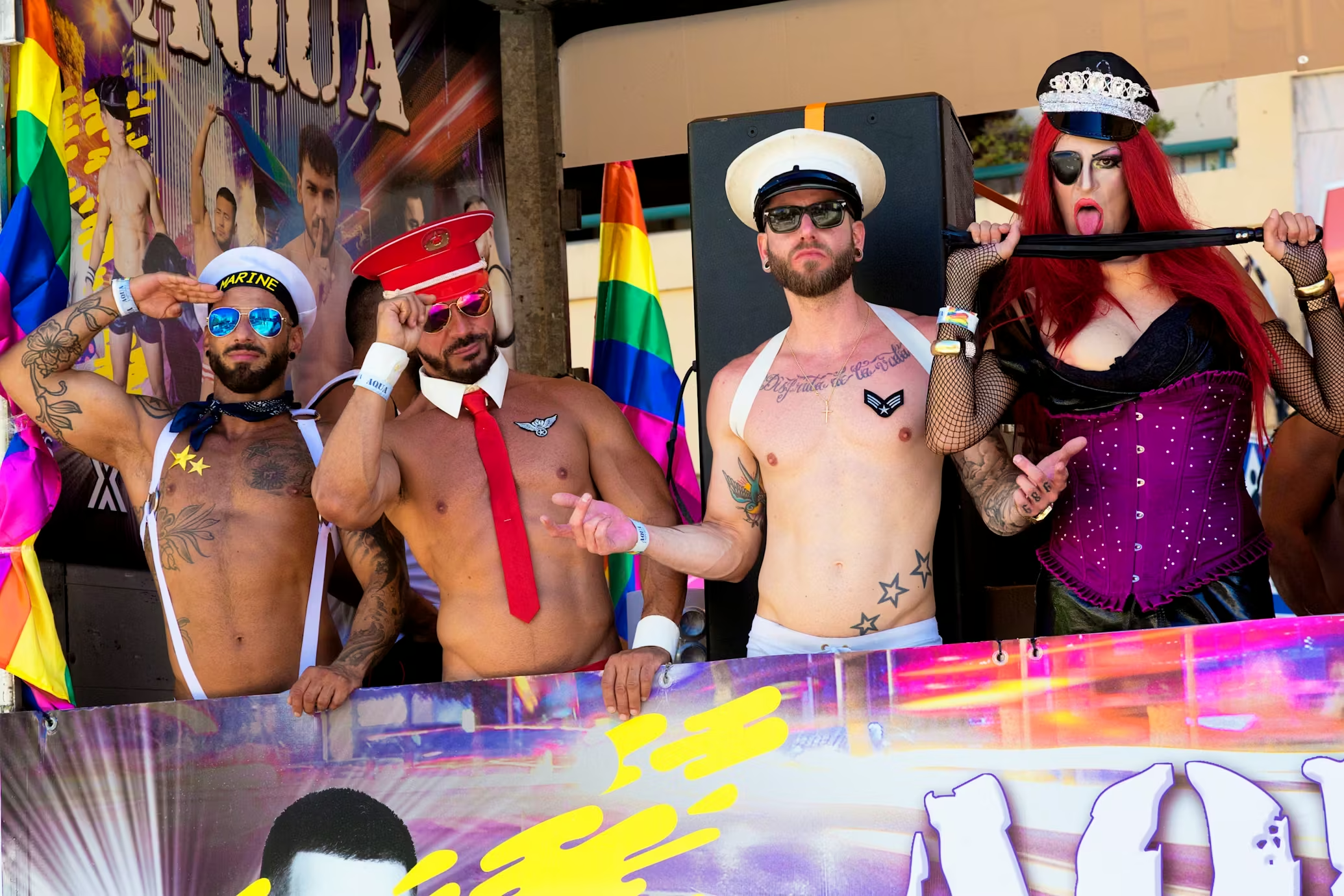
By the 1970s and ’80s, poppers had become a familiar sight in gay bars, clubs and sex shops, especially in the big nightlife scenes. This was the era of disco, of newly visible gay communities, of spaces where men could actually be themselves after dark. Poppers were cheap, legal to buy, and already floating around — so they became one of the small, everyday things that were simply there in those spaces, the way a particular song or a particular bar becomes part of a scene.
That’s really the honest answer to how they became such a fixture in gay culture. It wasn’t invented for gay men and it was never exclusive to them. It just happened to land in the middle of a vibrant, social, nightlife-heavy culture at the right moment, and it stuck around long enough to pick up decades of associations, in-jokes and memories.
Here’s the bit I think matters most, and it’s the thing I’d want a first-time reader to take away:
Familiarity doesn’t equal participation.
If you ask a room of gay men “do you use poppers?”, nearly all of them will know exactly what you mean — but their actual answers will be all over the place. Some like them now and then. Some tried them once, got a headache, and never bothered again. Some have genuinely never been curious. And nobody in the room is surprised by any of those answers. Knowing what poppers are is close to universal in gay culture. Actually using them is nowhere near universal. Those are two completely different things, and most of the confusion online comes from mixing them up.
The Customer Who Thought It Would Change His Life
Let me tell you about a conversation that’s stuck with me for years, because it sums up where poppers really sit.
A customer bought a single bottle, then came back a couple of weeks later — not for a refill, but almost to file a report. He told me, more or less – “I thought this was going to completely change everything, because people online talk about it like it’s some secret ingredient.” And after actually trying it, his verdict was a very calm “…oh. That’s it?”
He wasn’t upset. He wasn’t thrilled. He’d just run head-first into the gap between the online mythology and the fairly modest reality. The internet had built the thing up into a life-changing event, and the actual product was, to him, a minor novelty he could take or leave.
I love that story because it’s the most honest review of poppers I’ve ever heard. So much of the noise around poppers and gay culture comes from two loud camps – people who talk about them like they’re an essential ingredient of gay sex, and people who talk about them like one use will end your life. Most real experiences sit quietly in the boring middle, and almost nobody posts that.
There Isn’t One “Gay Experience” of Poppers
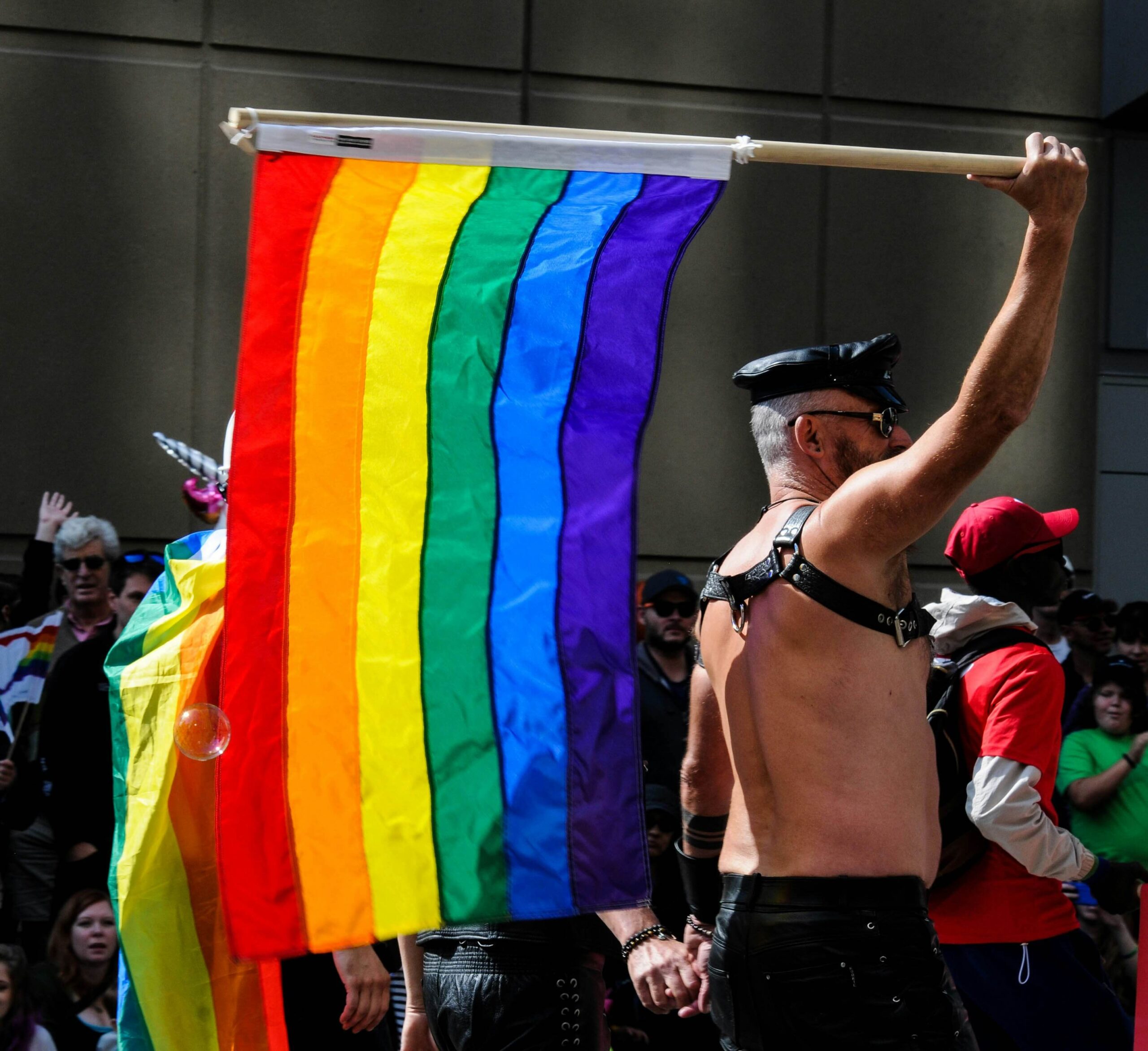
This is where it gets genuinely interesting, because there is no single gay relationship with poppers. It changes with the scene, the generation, and honestly the city you’re standing in.
The Bear, Leather and Pup Scenes
In the communities Husky Bear naturally overlaps with — bear, leather, pup and kink — poppers tend to get treated in a very matter-of-fact way. They’re not scandalous and they’re not a badge of belonging. Someone might ask “what brand do you like?” in the same flat, practical tone they’d use to ask about a harness or a bottle of lube. The conversation is about personal preference, not identity. It’s understood that using them or not using them says absolutely nothing about who you are.
Guys Newer to the Scene
Someone who’s just come out in their early twenties often meets poppers in a completely different way — through TikTok, X, memes and hookup apps, long before they ever see a bottle in real life. That generation usually has more information available than any before it, but it’s tangled up with a lot more misinformation too. They’ve heard the jokes without the context, so there’s often real uncertainty underneath the confidence – they know poppers are “a thing” without knowing what the thing actually is. Which, if you’re reading this as one of those guys — that’s completely normal, and it’s exactly why a plain-English explainer like this exists.
Older Gay Men
For a lot of older gay men, poppers are simply background furniture. They remember them in the bars and shops decades before anyone was debating them in a comments section. To them there’s nothing trendy or controversial about it at all — it’s just one more familiar object from a lifetime of nightlife, no more remarkable than a particular club or a particular brand of beer.
Different Settings, Different Relationships
Setting matters as much as scene. At a circuit party or in a club, poppers are part of the backdrop for some people. In long-standing sexual spaces like saunas and sex clubs, they’re familiar simply because those environments have deep-rooted cultures of their own. But talk to couples who’ve been together for years and you’ll often find they never bother with them at all — or that one partner likes them and the other shrugs. And a huge number of gay men, outside any of these settings, go through life barely thinking about poppers from one year to the next.
That’s why I’d never write about “the gay experience” of poppers as if it were one thing. It’s a cultural touchpoint that different generations and subcultures have each formed their own relationship with. Some embrace it, some avoid it, most land somewhere in between.
The Myths About Poppers Worth Clearing Up

A few misconceptions come up so often I could set my watch by them.
Myth one – every gay man uses poppers. He doesn’t. Loads never have. As above — familiarity isn’t the same as use, and knowing about something is not the same as reaching for it.
Myth two – they’re a required part of gay sex or some kind of shortcut. They’re not a requirement for anything, and they don’t replace communication, patience, or lube. Anyone expecting a small bottle to solve every situation is setting themselves up to be underwhelmed — ask my returning customer.
Myth three – they’re uniquely, dramatically dangerous and one use ruins your life. That’s not an accurate picture either. Like a lot of products sold to adults, there are real risks and there are sensible precautions, and the responsible thing is to read the label, follow the safety information, and buy from a properly registered seller rather than some random unlabelled bottle off a stranger. Husky Bear has been a fully registered EU business since 2016, with everything documented in the Slovenian chemical management system — which matters far more for your safety than any breathless comment thread.
If I could hand every reader a single sentence to walk away with, it’s this – stop treating poppers as either magic or evil. They’re neither. They’re a product some people enjoy, some people don’t, and everyone deserves to understand before deciding whether it’s something for them.
So, What Are Poppers in the Gay Community? The Honest Summary
Within gay culture, poppers are a small, long-standing cultural touchpoint with a genuinely interesting backstory — a Victorian heart medicine that popped, drifted into 1970s gay nightlife, and never quite left. They’re widely known and far less widely used. Different scenes, generations and cities all relate to them differently. And the mystery that surrounds them online is mostly noise – the reality is far more ordinary, and far more relaxed, than either the hype merchants or the fearmongers will tell you.

If you’ve read this far and you’re curious to see what an actual bottle looks like, one that leans right into this whole conversation is the French-made Gay Secret Poppers 25ml by Funline — an amyl nitrite formula rated 5/5 on our strength meter, with a proudly rainbow label that wears the culture on its sleeve. If you’d rather not guess, our 60-second recommendation quiz points you at a formula and strength based on what you’re after, and you can always browse the full poppers shop at your own pace.
Officially, of course, every bottle on our shelves is a leather cleaner. What that history, that culture and those little rainbow bottles mean to you after that — well, we’ll leave that part to you.
Until next time stay safe, stay sexy, stay curious 🐾💋
Frequently Asked Questions
-
Are poppers only used by gay men?
No. Poppers are strongly associated with gay culture because they became part of gay nightlife decades ago, but they’re not exclusive to it. Plenty of straight people buy them too, and plenty of gay men never touch them. The association is historical and cultural, not a rule about who does or doesn’t use them.
-
Why are poppers associated with the gay community?
Mostly timing and place. Poppers were cheap, legal and already circulating when gay nightlife exploded in the 1970s and ’80s, so they became one of the everyday things that were simply present in those clubs, bars and social spaces. Decades of shared jokes, memories and references cemented the association, even though poppers were never invented for or limited to gay men.
-
Does every gay man use poppers?
No — this is one of the biggest myths. Almost every gay man will recognise the word, but actual use is nowhere near universal. Some use them occasionally, some tried them once and never again, and many have simply never been interested. Familiarity with poppers and use of poppers are two very different things.
-
What are poppers made of?
Poppers are made from a family of chemicals called alkyl nitrites. The most common is amyl nitrite, with propyl, pentyl and hexyl versions also widely sold, along with various blends. The formula and its strength are the main things that differ from one bottle to the next, which is why sellers like Husky Bear rate products on a strength scale.
-
Where can I buy poppers safely in the EU?
Buy from a registered, transparent seller rather than an unlabelled bottle from a stranger. A real poppers shop will show clear product labels, safety information, brand and formula details, and a real registered business behind it. Husky Bear has operated as a fully registered EU business from Slovenia since 2016, with plain discreet packaging and everything documented in the national chemical management system.