
Don’t want to read the whole guide? Here is the absolute best way to handle your poppers storage to keep them hitting like new:
- Keep them in the original bottle. Do not pour them into smaller travel jars.
- Store them upright in a cool, dark place. A bedside drawer or bathroom cabinet (if it doesn’t get hot and steamy) works perfectly. Keep them far away from windows, radiators, and hot cars.
- Seal the cap tightly and quickly. Every second the bottle is open, the liquid evaporates and weakens. Close it firmly immediately after use.
- If you use the fridge, let it warm up first. If you refrigerate them, wait until the bottle reaches room temperature before opening it to prevent moisture from ruining the liquid inside.
Alright babes, let’s talk about the details of something everyone forgets until it’s too late — how to actually handle your poppers storage so they stay fresh and strong.
We all love that fresh, punchy bottle that hits just right. But if you’ve ever opened one a few weeks later and thought, “Wait… why does this smell weak?” — chances are, the heat or air got to it. Here’s the simple truth: alkyl nitrites do not like heat, light, or air. Treat them badly, and they’ll lose their power fast.
Over the years, I’ve heard every hack, myth, and trick in the book. Today, I’m going to walk you through exactly how to store them right, what common mistakes to avoid, and how to keep your bottles perfectly fresh.
The Correct Way To Poppers Storage
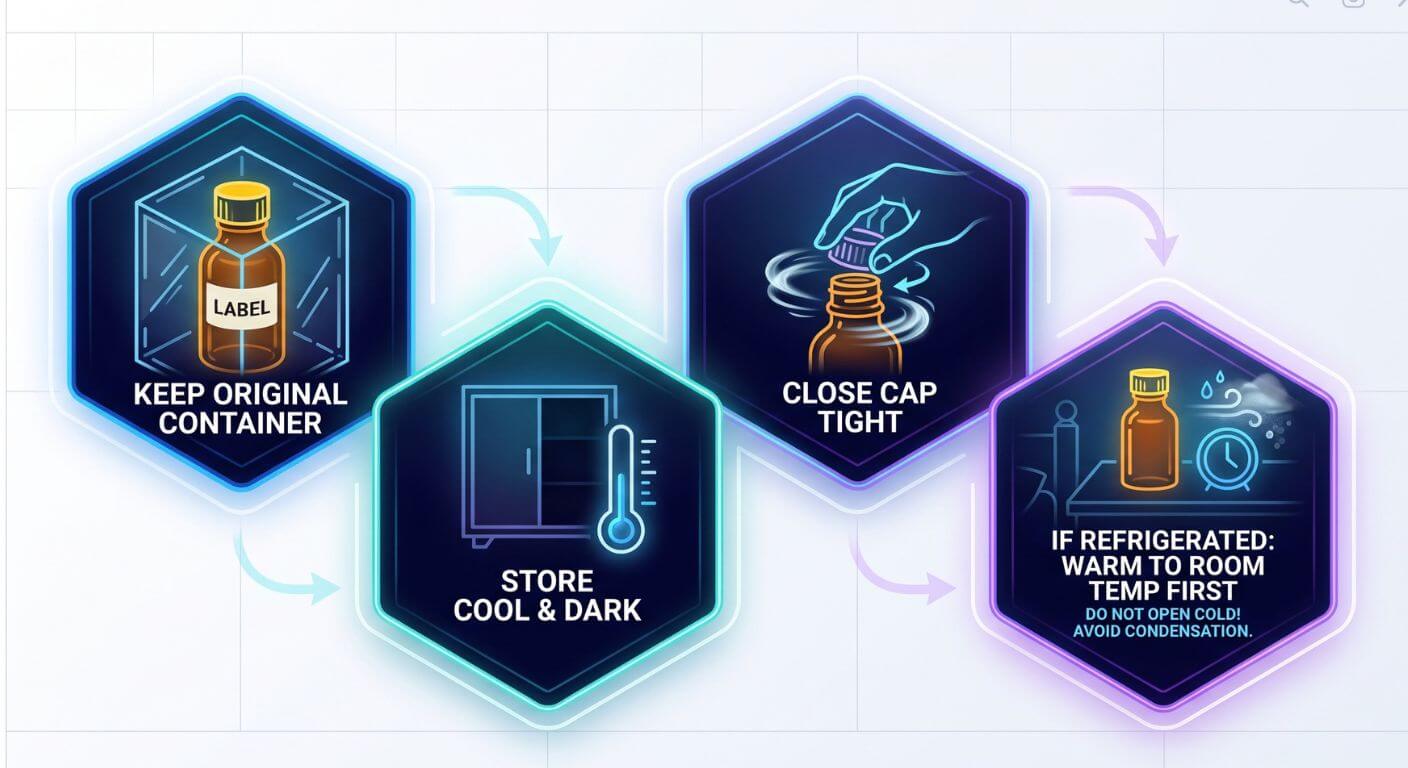
While it’s easy to focus on what ruins a bottle, getting your storage right is actually incredibly simple. You don’t need fancy containers or weird tricks. Here is the exact, correct way to store your bottles to maximize their lifespan:
- Stick to the original packaging: Keep the liquid exactly in the bottle it came in. The manufacturers choose specific materials and cap seals designed to handle highly volatile alkyl nitrites.
- Always store them upright: Never lay the bottle on its side in a drawer or bag. You want to keep the liquid away from the neck and the threads of the cap. If liquid pools around the threads, it compromises the air-tight seal and causes rapid evaporation.
- Find a stable, dark environment: A cool, dark cupboard or a dedicated drawer is your best bet. You are looking for a spot with a stable temperature that never sees direct sunlight.
- Minimize air exposure: The moment you are done, put the cap back on tightly. Do not leave the bottle sitting open on a nightstand for five minutes. Air is the enemy of potency.
The Classic Mistake to Store Poppers
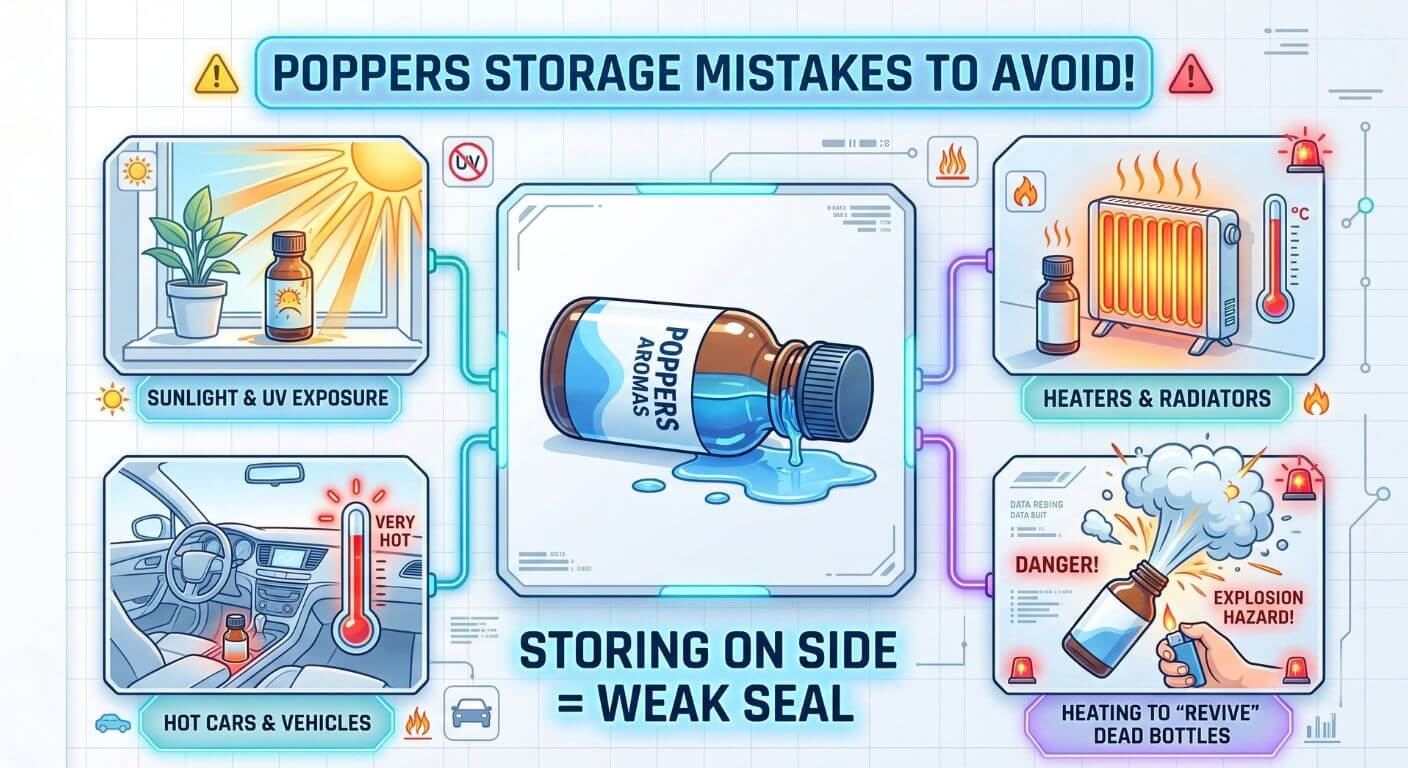
1. Heat Is Not Your Friend
I’ve had the classic mistake happen to me: leaving a brand-new, favorite bottle somewhere warm for just a little longer than I should have. When I finally came back to it, I noticed the smell seemed noticeably different, and the bottle no longer had that fresh punch it had when I first opened it.
That’s the exact point where I stop treating it as something I can “bring back” and just consider it compromised. There isn’t a reliable, scientific moment where you can definitively say, “Yep, it’s completely dead” just from the smell, but a changed odor is a clear sign that chemical degradation has happened. Heat, light, and exposure to air all contribute to this. The easiest lesson to learn? Simply do not leave your bottle somewhere hot or poorly sealed. Windowsills, radiators, and hot cars are all terrible ideas.
2. The Fridge Debate: Cool Storage Done Right
Some people swear by keeping their bottles in the fridge, but I am a bit more cautious than the usual “stick it in there and forget about it” advice. I don’t believe refrigeration is universally recommended because proper storage instructions can vary wildly by product and formulation.
If your specific label allows for cool storage, keep the bottle tightly closed, upright, and in a stable, cool place. But here is the most important rule if you use the fridge: when you take it out, leave the bottle closed until it comes back toward room temperature.
If you open a freezing cold bottle in a warm room, you are going to get condensation. Condensation on the outside of the bottle is normal, but moisture getting into the liquid inside is exactly what you want to avoid. Do not open it immediately just to “check” it. If the manufacturer doesn’t specifically recommend refrigeration, just keep it in a cool, dark drawer or cupboard. It’s a much simpler poppers storage routine than experimenting with extreme temperature changes.
3. Skip the “Decanting” Hack
You might have heard a popular tip suggesting you pour a little bit of your fresh bottle into a smaller container so your main stash isn’t constantly exposed to air. I actually strongly advise against this.
With volatile alkyl nitrites, the compatibility of the container and the cap really matters. Transferring the liquid creates unnecessary opportunities for spills, rapid evaporation, skin or eye exposure, and accidental contamination.
My routine is much safer and simpler: keep it in the original container, keep the manufacturer’s closure intact, and simply minimize how long the bottle is open. Do not improvise with household jars or random plastic travel bottles. Different products contain different nitrites, and assuming “glass is always safe” or “this plastic will hold up” is putting too much confidence in an internet rumor.
4. Stop Shaking the Bottle
There is a very persistent myth that shaking your bottle “wakes it up” or somehow makes the effects stronger. Let’s clear this up: there is absolutely no scientific basis for this. There is nothing inside the liquid to “activate.”
The practical problem is that you are dealing with a highly volatile liquid. When you violently agitate the bottle, you increase contact between the liquid and the air inside the headspace. Worse, shaking increases the chance of getting the liquid around the neck and the threads of the cap. When liquid gets on the threads, it compromises the seal, making leakage and evaporation much more likely.
Keep the bottle upright, keep it closed tight, and handle it as little as necessary. If a bottle has grown weak over time, shaking it will not reverse the chemical deterioration that has already taken place.
5. Don’t Try to “Revive” Dead Bottles
When a bottle has lost its punch, do not get creative. I’ve seen wild claims online suggesting you should warm an old bottle up, leave it open to “air out,” add water or alcohol, or mix it with a fresh bottle.
I do not recommend any of these. These are not established ways to reverse chemical degradation, and they introduce unnecessary exposure to a volatile, flammable liquid. Deliberately heating a bottle is the absolute worst thing you can do—you are turning a simple storage issue into a serious fire and vapor hazard. Once you start altering the contents, you no longer have a product whose composition or safety you can reasonably rely on. If it smells off, it’s done.
Proper Disposal of Poppers Bottles
When it’s time to get rid of a compromised bottle, follow the product label and your local hazardous household waste rules. Do not pour an unwanted bottle down a sink or toilet, do not deliberately evaporate it outside, and absolutely do not burn it.
Keep the container securely closed and away from heat or ignition sources while you arrange for proper disposal. If a bottle is leaking or severely damaged, avoid direct skin contact and consult your local waste service. And of course, if someone is accidentally exposed to the liquid—especially if swallowed—stop worrying about storage and contact a poison-control center immediately.
Treat your bottles with respect—cool, dark, upright, and sealed tight. Take care of them, and they’ll take care of you.
Stay safe, stay sexy, stay curious 🐾💋
Frequently Asked Questions About Poppers Storage
What is the best temperature for poppers storage?
The ideal storage environment is a cool, dark place. Room temperature (around 68°F to 72°F) is generally fine if kept in a dark drawer, but cooler is better. Always check the manufacturer’s label; if they recommend refrigeration, ensure you let the bottle reach room temperature before opening to prevent moisture buildup inside.
Does keeping poppers in the fridge make them last longer?
It can, provided the manufacturer recommends it. However, the biggest risk with fridge storage is condensation. If you open a cold bottle in a warm room, moisture will get into the liquid and degrade it. Always let a refrigerated bottle sit closed until it reaches room temperature before use.
Why do my poppers lose their strength so quickly?
Alkyl nitrites are highly volatile and degrade rapidly when exposed to heat, light, and oxygen. Every time you open the cap, volatile compounds escape and air enters. Failing to seal the cap tightly, leaving the bottle in a warm room, or getting liquid on the cap threads will cause the formula to weaken quickly.
Can I pour my poppers into a smaller travel bottle?
No, transferring the liquid is highly discouraged. Volatile nitrites require specific container materials and cap seals to remain stable. Moving them to arbitrary plastic or glass bottles risks chemical reactions, leaks, and accidental skin exposure. Always keep them in their original, manufacturer-provided container.
How do I know if my poppers have gone bad?
While there is no single scientific test you can do at home, a noticeable change in smell is the biggest indicator. If the liquid loses its fresh, sharp punch, smells substantially different, or seems completely flat, it has chemically degraded. Do not try to revive it by heating or shaking it; it is time to safely dispose of it.