Gay cruising has been part of queer life for over a century — long before dating apps, before legal protections, before any of the cultural visibility that exists today. If you’ve heard the term and wondered what it actually means, or if you’re already familiar and want a deeper reference, this guide covers everything: what cruising is, where it comes from, how it works today, the unwritten rules and how to stay safe. No judgment, no shame — just honest, informed coverage of a legitimate part of gay culture.
What Is Gay Cruising?
Gay cruising is the practice of searching for casual sexual encounters in public or semi-public spaces — parks, public toilets, saunas, bars, and increasingly through apps. The term “cruising” comes from the idea of moving slowly through a space, making eye contact, and signalling interest. It is a consensual, community-rooted form of hook-up culture that has existed in gay and queer communities worldwide for generations.
The word “cruise” in this sexual context traces back to the early twentieth century, derived from nautical language and later adopted in slang to describe the slow, deliberate way men would move through spaces looking for a connection. It is distinct from dogging (heterosexual public sex) or cottaging (cruising specifically in public toilets, a term more common in British usage), though all three share the broader framework of outdoor or semi-public sexual culture.
- Definition: The practice of seeking casual sexual encounters in public or semi-public spaces
- Origins: Documented in queer communities from the early 1900s; shaped by necessity under criminalisation
- Common venues: Parks, public toilets (cottaging), saunas, sex clubs, cruising bars, apps
- Key principle: Consent is everything — signals, eye contact, and verbal check-ins define the interaction
- Modern context: Coexists with app-based hook-up culture; many prefer the anonymity and spontaneity of in-person cruising

A Brief History of Gay Cruising Culture
Understanding what gay cruising is requires understanding why it developed the way it did. For most of the twentieth century, same-sex intimacy was illegal across Europe and North America. Gay men had nowhere to gather openly, so they developed their own subterranean geography — parks, public baths, train station toilets, and certain bars became meeting grounds that existed in plain sight but in coded silence.
These spaces were dangerous. Police entrapment was routine. Men lost their jobs, their families, and their freedom for being caught. And yet cruising persisted — not out of recklessness, but because human connection is a fundamental need, and this was often the only way to meet it. The Molly houses of eighteenth-century London, the Turkish baths of pre-war New York, the Bois de Boulogne in Paris — all are part of the same long lineage.
Post-Stonewall and Into the Modern Era
The Stonewall riots of 1969 changed the public face of gay life, but cruising culture didn’t fade — it evolved. The 1970s saw the rise of dedicated gay sex clubs and bathhouses as open, commercially operated venues. The AIDS crisis of the 1980s reshaped the culture again, bringing harm reduction, community solidarity, and a new, more explicit conversation about sexual health. By the 1990s and 2000s, decriminalisation across most of Europe gave cruising spaces a degree of legitimacy they had never had before.
Today, cruising coexists with app culture. Grindr and its successors have moved much of the initial negotiation online — but the physical spaces endure. For many gay men, in-person cruising offers something apps cannot: anonymity, spontaneity, and a connection to the broader history and culture of queer life.
Where Does Cruising Happen Today?
Cruising spaces vary in formality, safety, and atmosphere. Here is how the main venues compare:
| Venue Type | Privacy Level | Safety | Best For |
|---|---|---|---|
| Parks / outdoor spots | Low — open environment | Variable; go in daylight or with knowledge of the area | Exhibitionists, naturalists, anonymity-seekers |
| Public toilets (cottaging) | Moderate | Legally risky in some jurisdictions | Discreet encounters; historically significant |
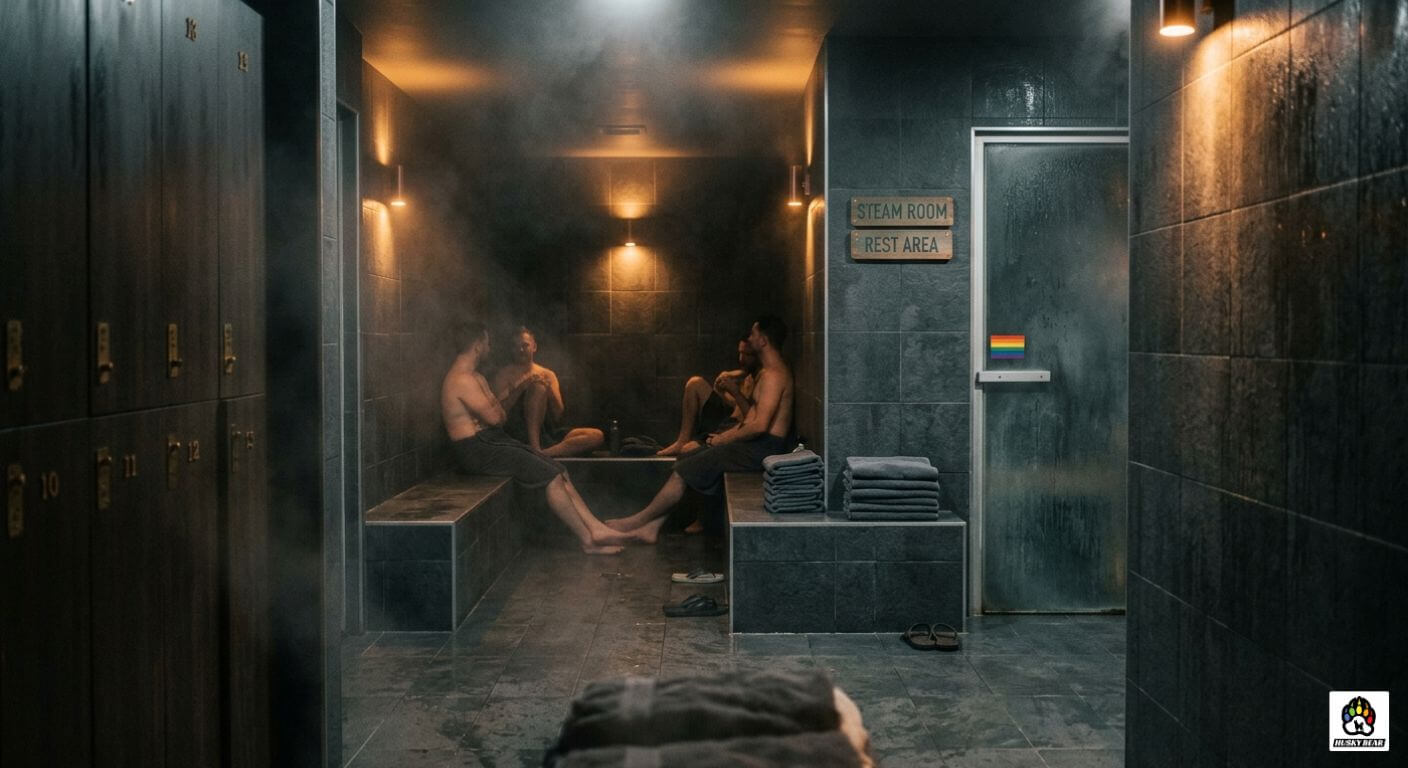
| Gay saunas / bathhouses | High — members-only or entry fee | Highest — managed, private, usually condoms available | Beginners; those who value safety and comfort |
| Sex clubs / darkrooms | High — controlled environment | High — staff present, clear house rules | Experienced cruisers; group and kink scenes |
| Apps (Grindr, Scruff, etc.) | Profile-based; some anonymity | Moderate — meet in public first for strangers | Pre-screening; specific desires; planning ahead |
For newcomers to cruising, a reputable gay sauna or sex club is almost always the best starting point. The environment is contained, the rules are clearly posted, and the clientele generally understands and respects consent norms far better than anonymous outdoor spaces.
Cruising Etiquette: The Unwritten Rules
Cruising has a sophisticated nonverbal language that has developed over generations. Getting it right is not just a matter of social grace — it is the foundation of mutual respect in a space built entirely on consent.
–>
- Eye contact is the opening bid. Sustained eye contact signals interest. Looking away and not returning means no. Never pursue someone who has looked away — it is the clearest possible signal.
- No means no, always. A head shake, turning away, or simply walking off is a refusal. There is no ambiguity. Do not follow, do not re-approach.
- Read the environment before you act. Different spaces have different norms. Watch what others do before engaging. A darkroom in a sex club operates differently from a wooded park trail.
- Silence is normal and acceptable. Many cruising encounters involve minimal or no verbal communication. This is part of the culture, not rudeness.
- Clean up after yourself. Respect the space. Leave it as you found it.
- Do not expose people who are not consenting. If members of the public are present who are not part of the scene, relocate or stop. Non-participants have not consented to witnessing sexual activity.
- Do not bring phones out in private venues. Photography or recording in sex clubs and saunas is almost universally prohibited and is a serious breach of trust.
Staying Safe While Cruising
Safety in cruising is multi-dimensional — it covers sexual health, physical security, privacy, and legal awareness. None of these need to be a barrier to participation; they just require a bit of planning.
Sexual Health
PrEP (pre-exposure prophylaxis) has transformed HIV prevention in cruising-active communities across Europe. If you are sexually active with multiple partners, speak to a GP or sexual health clinic about whether PrEP is right for you. Regular STI testing — ideally every three months for sexually active gay men — is the single most effective thing you can do for yourself and your partners. Carry condoms and use them, especially with new or unknown partners.
Physical Safety
Outdoor cruising spots, particularly less-established ones, carry inherent risks. Go at times when others are present. Tell someone where you are going if you are visiting an unfamiliar location. Trust your instincts — if something feels wrong, leave. Gay saunas and licensed sex clubs are substantially safer because they are managed environments with staff.
Privacy and Legal Awareness
In most EU countries, consensual adult sexual activity in private spaces is legal. The critical word is private. Engaging in sexual activity in genuinely public spaces — where non-consenting members of the public could be exposed — carries legal risk in most jurisdictions. Know the laws where you are, and opt for managed venues when in doubt. For broader guidance on sexual health, aidsmap.com is one of the most comprehensive, evidence-based resources available in Europe.
Frequently Asked Questions About Gay Cruising
Is gay cruising legal?
It depends on the venue and jurisdiction. Consensual adult sexual activity in genuinely private spaces (licensed saunas, sex clubs, private homes) is legal in most EU countries. Outdoor cruising in parks or public toilets sits in a legal grey area in many countries — technically public indecency laws apply, but enforcement varies widely. Know the laws where you are.
What is the difference between cruising and dogging?
Cruising is primarily associated with gay and queer culture and occurs in a range of settings from parks to saunas to apps. Dogging is a term used primarily in the UK for heterosexual public sex (typically in cars or car parks), often with exhibitionist elements. Both involve semi-public sexual encounters among consenting adults, but they developed in distinct cultural contexts.
What does “cottaging” mean?
Cottaging is British slang for cruising in public toilets (called “cottages” in older slang). It has a long history in British gay culture and carries significant cultural weight — it was the basis for several famous legal cases in the twentieth century, including the prosecution of Oscar Wilde. In the modern context, the term survives but the practice has largely moved to more private and safer venues.
Is cruising safe for gay men new to it?
It can be, with the right preparation. Starting in a managed environment — a reputable gay sauna or licensed sex club — is strongly recommended for anyone new to the scene. These venues have staff, clear rules, and an existing culture of consent. Outdoor cruising carries more variable risk and is better approached after you have some familiarity with the culture and nonverbal conventions.
Final Thoughts on Gay Cruising Culture
Cruising is one of the oldest, most resilient expressions of gay sexual culture. It developed under conditions of persecution and survived decades of legal hostility, health crises, and social stigma. Today it coexists with a world in which gay men can be publicly out, legally partnered, and culturally visible — and it endures because it offers something different: immediacy, anonymity, and a direct connection to a community tradition that stretches back generations.
Whether you are exploring the idea for the first time or looking to deepen your understanding, the most important things to carry into any cruising space are respect for consent, awareness of your own sexual health, and a genuine curiosity about the culture you are entering. The rest follows from there.
Stay curious, stay safe, and play hard. 🐾💋