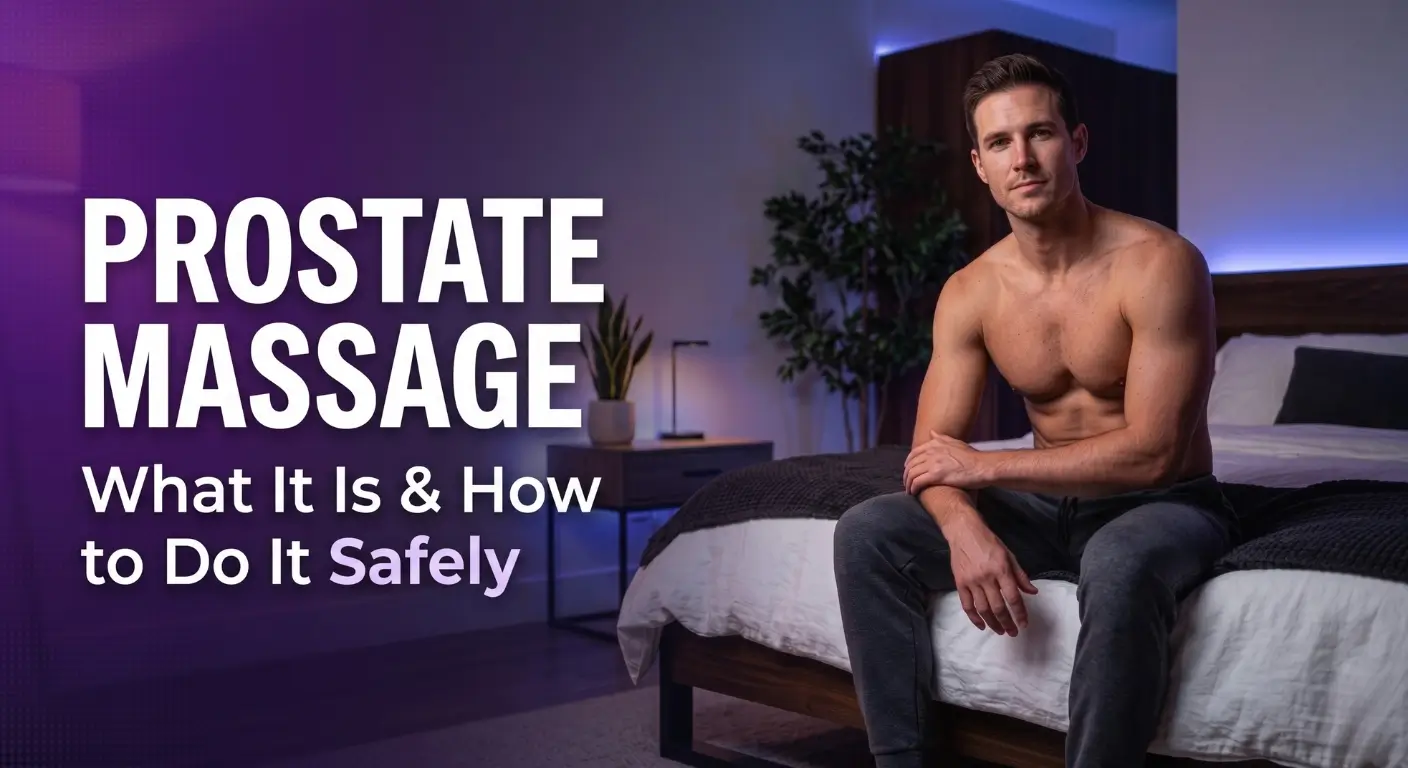

Prostate massage is the manual stimulation of the prostate gland to release seminal fluid — and it’s more common than most people assume. Also called prostate milking or prostate stimulation, it’s practiced for both potential health benefits and sexual pleasure. This guide walks you through the anatomy, the evidence, the real risks, and how to try it safely — without the moralising.
- What it is: Stimulation of the prostate gland via the rectum (internal) or perineum (external) to release prostatic fluid.
- Potential benefits: May ease symptoms of chronic prostatitis, support pelvic health, and intensify orgasm — though evidence is limited.
- Who should NOT do it: Anyone with acute bacterial prostatitis, prostate cancer, recent prostate surgery, rectal disease, or active infection.
- How to start safely: Empty bladder and bowels, use a glove and water-based lube, go slow, stop if there’s pain.
- Science says: Promising but not definitive — more research is needed before strong medical claims can be made.
What Is Prostate Massage?
Prostate massage — also called prostate milking or prostate stimulation — is the deliberate manual stimulation of the prostate gland to release seminal fluid stored in the prostatic ducts. It can be done internally (through the rectum) or externally (via the perineum). People practice it for potential health reasons, sexual pleasure, or both.
The prostate produces a significant portion of seminal fluid. Massaging it can cause this fluid to drain from the ducts — which is the origin of the term “milking.” This drainage is thought by some practitioners to relieve pressure, clear the ducts, and potentially ease certain symptoms related to prostate inflammation.
It’s worth distinguishing between two contexts. In a medical setting, doctors have historically used prostate massage as a diagnostic and treatment technique — though it’s become less common. In a personal or sexual context, prostate stimulation is widely practiced because the prostate is a dense cluster of nerve endings that can produce intense sensation and, for many men, a more powerful orgasm than penile stimulation alone.
For a broader clinical overview, Cleveland Clinic’s guide to prostate massage is a solid starting reference.

Prostate Anatomy: Where Is It and How Do You Find It?
The prostate is a walnut-sized gland — roughly 30 grams in a healthy adult — located directly below the bladder and above the pelvic floor muscles. The prostate’s anatomy is well documented by the NCBI: it sits in front of the rectum, which is what makes it reachable through the rectal wall during an internal massage.
The gland is partly muscular and partly glandular, with ducts that open into the prostatic urethra. It has three lobes — middle, left, and right — and three anatomical zones:
| Zone | Location | Note |
|---|---|---|
| Central zone | Surrounds the ejaculatory ducts | About 25% of gland volume |
| Peripheral zone | The main body of the gland | Largest zone (~70%); where most prostate cancers originate |
| Transitional zone | Surrounds the urethra | Where benign prostatic hyperplasia (BPH) typically develops |
For a massage to reach the prostate, a finger or device is inserted into the rectum and directed toward the front wall — the same direction as the belly button. At the right depth (roughly 5–8 cm in most adults), you’ll feel a slightly firm, rounded structure. That’s the prostate. It often feels somewhat different from the surrounding tissue — many people describe it as similar to a small walnut or grape.
The Prostate Cancer Foundation’s anatomy overview is a helpful visual reference if you want a deeper understanding of the gland’s structure.
Potential Benefits of Prostate Massage
There are two broad categories of potential benefit: health-related and pleasure-related. They’re worth treating separately, because the evidence behind each is quite different.
Health-related benefits
The most commonly cited potential health benefit is relief from symptoms associated with chronic prostatitis — inflammation of the prostate — or benign prostatic hyperplasia (BPH), where the prostate is enlarged. The theory is that draining fluid from the prostatic ducts reduces pressure, clears any blockage, and may ease associated discomfort.
Symptoms that some people report improvement in include:
- Painful or uncomfortable ejaculation
- Difficulty urinating or reduced urine flow
- Pelvic pressure or aching
- Erectile dysfunction linked to prostate-related tension
Research from Healthline’s review of prostate massage therapy also notes early evidence suggesting it may help maintain healthy urine flow in older men. However — and this matters — the evidence base here is limited. Small studies, clinical reports, and preliminary trials make up most of what’s available.
Pleasure-related benefits
This one has a more straightforward explanation. The prostate is packed with nerve endings and is often called the “male G-spot” for good reason. Prostate stimulation can produce significantly more intense orgasms than penile stimulation alone — due to greater pelvic muscle contractions and direct nerve activation. Many men who try it report a noticeably different quality of sensation.
This isn’t speculative — it’s anatomy. The prostatic plexus (the nerve network around the prostate) is one of the densest sensory regions in the male pelvic floor. Stimulating it directly produces a qualitatively different response than stimulation further from the source.

What Does Science Actually Say?
It’s worth being honest here: the research on prostate massage is thin. Most of what’s cited comes from small trials, case reports, and preliminary studies — not the large randomised controlled trials that give medicine its highest level of confidence.
Here’s a fair summary of what the evidence does and doesn’t support:
| Finding | Source / Context | Weight of Evidence |
|---|---|---|
| No evidence of definitive medical benefit; more research needed | Cleveland Clinic | Institutional position |
| May relieve chronic prostatitis symptoms — but less effectively than antibiotics | 2006 clinical trial | Single small trial |
| Insufficient evidence to claim definitive symptom benefit | 2018 literature review | Review paper |
| Men with chronic prostatitis or BPH did experience symptom reduction using a home device | 2009 preliminary trial | Preliminary / small sample |
| May help maintain healthy urine flow in older men | Various clinical reports | Low-level evidence |
The bottom line is this: prostate massage probably won’t harm a healthy person who does it correctly, and many people find it genuinely beneficial. But it isn’t a proven medical treatment. If you’re considering it for a health reason — particularly prostatitis or BPH — speak to a doctor first. Don’t use it as a substitute for proper diagnosis or care.
For a thorough look at the studies and their limitations, Medical News Today’s overview of prostate milking is a well-sourced read.
Who Should NOT Try It (Contraindications)
This section matters. Prostate massage is safe for many people — but for some, it carries real risk. If any of the following apply to you, do not attempt prostate massage without speaking to a doctor first.
- Acute bacterial prostatitis. This is the most important one. Massaging an actively infected prostate can push bacteria into the bloodstream, causing bacteremia or sepsis. Don’t do it. Acute prostatitis needs antibiotics — not massage.
- Suspected or confirmed prostate cancer. Massage could potentially spread cancerous cells. Get medical clearance before proceeding.
- Recent prostate surgery. The tissue needs time to heal. Massage too soon can cause injury or interfere with recovery.
- Active rectal or anal disease. This includes hemorrhoids, fissures, or any active inflammation or infection in the rectal area.
- Prostate stones (prostatic calculi). Massage can cause significant discomfort or damage if stones are present.
- Lubricant allergy or sensitivity. If you’re allergic to latex or specific lubricant ingredients, use alternatives — hypoallergenic gloves and fragrance-free, body-safe lubricants.
- Fever, severe pelvic pain, or systemic symptoms. These may indicate infection or another condition requiring medical attention first.
One additional note: prostate massage raises PSA (prostate-specific antigen) levels. If you have a PSA screening test scheduled, avoid prostate massage in the days beforehand. An elevated PSA caused by massage could produce a misleading result and trigger unnecessary follow-up.
How to Do It Safely: Step-by-Step
If none of the contraindications above apply to you, here’s how to approach prostate massage safely — whether you’re trying it alone or with a partner.
Preparation
- Empty your bladder and bowels. This reduces discomfort and makes the experience cleaner and more comfortable.
- Trim fingernails short and wash your hands thoroughly. Sharp or ragged nails can cause internal scratching. If using a finger, a latex or nitrile glove (or a finger cot) is strongly recommended for hygiene.
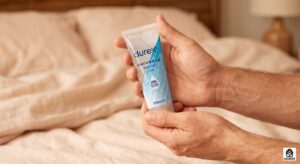
- Choose the right lubricant. Water-based lubricant is the best choice for anal play — it’s safe with latex gloves and most materials, easy to clean, and body-safe. Our lubricants collection has a range of water-based options suited to this. If you find insertion uncomfortable, a dedicated anal relaxing product can help the muscles relax beforehand.
- Use a dedicated prostate massage device if possible. Purpose-designed devices are often safer than fingers alone — they have a controlled reach, are easier to manoeuvre, and eliminate the hygiene variables that come with direct contact.
- Get into a comfortable position. Lying on your back with knees drawn up, lying on your side in a foetal position, or squatting all work. Choose whichever feels most relaxed for you.
Internal technique (finger or device)
- Apply a generous amount of lubricant to the anus and the finger or device tip.
- Breathe slowly and consciously relax the pelvic floor muscles. Don’t force entry. The anus has two sphincter muscles — the external one is under voluntary control; the internal one relaxes on its own when you’re genuinely relaxed.
- Gently insert a finger (typically the index or middle finger) or device, angling toward your belly button.
- At around 5–8 cm depth, you’ll feel the prostate — a rounded, slightly firm structure about the size of a walnut.
- Apply gentle pressure using a circular or back-and-forth motion. Don’t press hard. The goal is light, rhythmic stimulation — not forceful kneading.
- Keep your first session short: 1–2 minutes of internal stimulation is plenty to start. You can increase duration and pressure in later sessions as you become more comfortable.
- Stop immediately if you feel sharp pain. Mild pressure or fullness is normal; sharp, acute pain is not.
External technique (perineum)
The external technique doesn’t involve any insertion. It’s the lower-risk option for beginners who want to explore prostate stimulation without internal access.
The perineum is the area of skin between the scrotum and the anus. Apply firm but gentle pressure with one or two fingers, using circular or back-and-forth motions. The prostate is not far below the surface here, and many people find that sustained pressure in this area produces a sensation similar to (though less intense than) internal stimulation.
After the massage
Clean up thoroughly — wash hands, clean any devices used. If you notice light, clear prostatic fluid during or after the massage, that’s normal. If you notice blood, significant pain, or discomfort that doesn’t resolve within a short time, see a doctor. And when you’re ready to explore anal hygiene products to make ongoing practice more comfortable, those are worth looking into as part of your routine.
Frequently Asked Questions
What is prostate massage and what does it do?
Prostate massage is the manual stimulation of the prostate gland — either through the rectum (internal) or via the perineum (external) — to encourage the release of prostatic fluid. It’s practiced for potential health benefits such as relief from chronic prostatitis symptoms, and for sexual pleasure, as prostate stimulation can produce more intense orgasms than penile stimulation alone.
Is prostate massage safe?
For most healthy men with no active prostate infection, prostate cancer, or recent surgery, prostate massage done correctly is considered low-risk. The key is preparation: use a glove, use plenty of water-based lubricant, go slow, and stop immediately if you feel sharp pain. It’s not safe for men with acute bacterial prostatitis, prostate cancer, rectal disease, or several other conditions — see the contraindications section above.
What is the difference between internal and external prostate massage?
Internal prostate massage involves inserting a finger or prostate massage device into the rectum to directly stimulate the prostate gland. External prostate massage is done by applying pressure to the perineum — the area between the scrotum and the anus — to indirectly stimulate the prostate without any insertion. External massage is lower risk and a good starting point for complete beginners.
Does prostate massage actually have health benefits?
The evidence is promising but not conclusive. A 2006 clinical trial found it helped relieve chronic prostatitis symptoms, though it was less effective than antibiotics. A 2009 preliminary trial found symptom reduction in men with chronic prostatitis or BPH using a home device. However, a 2018 literature review concluded there isn’t sufficient evidence to claim definitive symptom benefits, and Cleveland Clinic states there’s no proven medical benefit. The honest answer: it may help, it probably won’t hurt if done correctly, but it’s not a substitute for medical care.
Who should not do prostate massage?
You should avoid prostate massage if you have acute bacterial prostatitis (it can cause bacteremia or sepsis), suspected or confirmed prostate cancer, recent prostate surgery, active rectal or anal disease, prostate stones, or a lubricant/latex allergy. If you have a fever, systemic symptoms, or severe pelvic pain, see a doctor before attempting anything. Also avoid it in the days before a PSA screening test, as massage raises PSA levels and can produce a misleading result.
What lubricant should I use for prostate massage?
Use a water-based lubricant. It’s compatible with latex gloves and most device materials, body-safe, and easy to clean. Avoid oil-based lubricants if you’re using latex gloves, as oil degrades latex. Silicone-based lubricants are long-lasting but not recommended with silicone devices. Apply generously — more is better than less when it comes to anal comfort and safety.
Can prostate massage improve sexual pleasure or orgasms?
Yes — this is one of the most consistent reports from people who practice prostate stimulation. The prostate is surrounded by a dense network of nerve endings. Direct stimulation can lead to orgasms that many men describe as significantly more intense than penile stimulation alone, due to greater involvement of the pelvic muscles and direct nerve activation. This is why it’s sometimes referred to as the male G-spot.
How do I find the prostate gland?
During internal massage, insert a gloved, lubricated finger into the rectum and angle it toward your belly button. At roughly 5–8 cm depth, you’ll feel a slightly firm, rounded lump — about the size and feel of a small walnut. That’s the prostate. If you’re using an external technique, apply firm pressure to the perineum (the area between the scrotum and the anus) — the prostate is relatively close to the surface here and many men can feel it respond to sustained pressure from outside.